Commercial Tennis Court Installation
Professional commercial tennis court installation for clubs, resorts, schools, and municipal facilities requiring tournament-grade surfaces and heavy-duty construction.
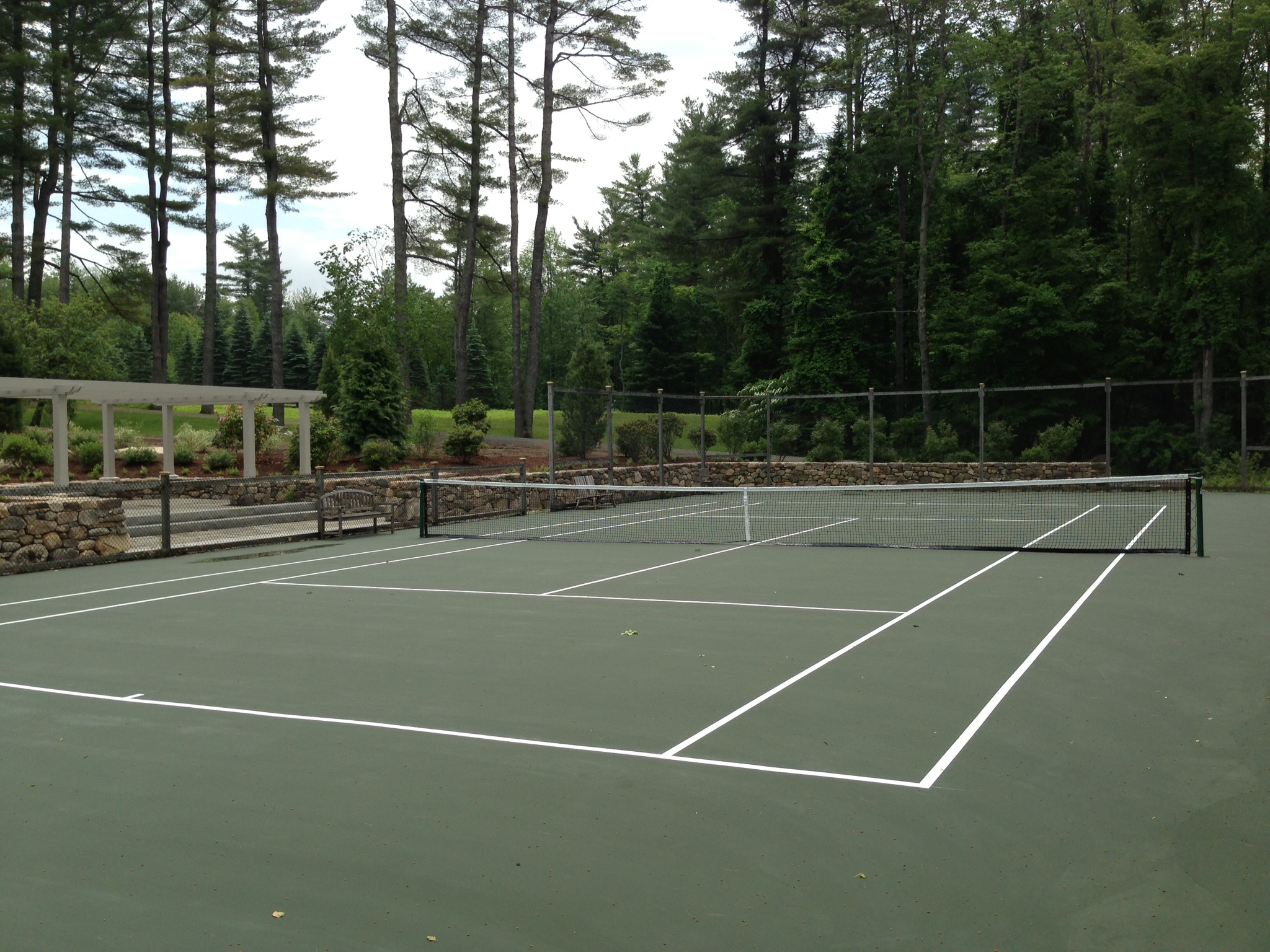
Commercial tennis court installations serve diverse institutional clients including country clubs, resorts, municipalities, schools, and multi-purpose recreational facilities. These projects differ significantly from residential installations in scale, complexity, and performance requirements. Commercial facilities must accommodate high-volume usage, tournament play, and diverse user groups while providing lasting durability and minimal maintenance demands. The Dallas-Fort Worth metroplex offers robust demand for quality tennis facilities, from elite country clubs to community parks serving growing suburban populations. Successful commercial installations require master planning that addresses site circulation, spectator amenities, support facilities, and future expansion potential. Understanding these complex requirements ensures projects serve their intended communities effectively. Commercial construction demands enhanced specifications, quality materials, and professional project management that delivers facilities on time and within budget. Working with experienced commercial court builders provides access to specialized expertise in institutional facility design and construction that residential-focused contractors may lack.
Commercial Tennis Court Installation Services
Commercial tennis court construction encompasses comprehensive services from initial feasibility studies through final commissioning and warranty support. Professional commercial contractors provide design assistance, engineering services, permit management, and construction coordination that simplify complex projects for facility owners and managers. Project planning for commercial facilities addresses unique requirements including code compliance for public access, accessibility standards, safety regulations, and operational considerations. Experienced contractors navigate these requirements efficiently, ensuring projects meet all applicable standards without costly delays or redesigns. Construction management coordinates multiple trades and phases typical of commercial projects. Site work, drainage infrastructure, court construction, fencing, lighting, and amenities require careful sequencing to optimize efficiency and quality. Professional project managers maintain schedules, control costs, and ensure contractor performance. Post-construction services including maintenance training, warranty support, and ongoing service relationships provide lasting value. Commercial facilities benefit from established relationships with contractors who understand their specific installations and can respond effectively to maintenance or modification needs.
Multi-Court Complex Planning
Master planning establishes overall site organization that optimizes circulation, functionality, and expansion potential. Planning considers current program requirements while accommodating future growth that many successful facilities experience. Comprehensive planning prevents costly retrofitting and site constraints that limit future options. Court orientation affects playability throughout the day, with north-south alignment preferred to minimize sun glare. However, site constraints may require alternative orientations that planning addresses through design features mitigating sun and wind effects. Professional analysis determines optimal orientation for specific site conditions. Buffer zones between courts provide separation that prevents interference between adjacent matches. Standard spacing of 18 to 24 feet between court fences allows comfortable player movement while minimizing land requirements. Wider spacing may accommodate spectator seating, walkways, or landscaping features. Support facilities including clubhouses, pro shops, restrooms, and storage require convenient access without interfering with court operations. Planning establishes logical relationships between courts and support spaces that enhance user experience. Service vehicle access for maintenance and emergency response must be accommodated. Parking and vehicular circulation separate from pedestrian court access ensure safety and convenience. ADA accessibility requirements apply to routes, facilities, and amenities. Stormwater management and environmental compliance integrate with site planning from project inception.
Heavy-Duty Surface Systems
Commercial court surfaces must withstand intensive use that residential courts rarely experience. Heavy-duty specifications include enhanced base thickness, premium acrylic systems, and reinforced construction that extends service life under demanding conditions. Investment in quality materials reduces lifecycle costs through extended durability. Base construction for commercial facilities typically uses reinforced concrete rather than asphalt for maximum longevity. Concrete bases resist deterioration from thermal cycling and provide stable foundations that minimize structural cracking. Additional base thickness accommodates heavy equipment access for maintenance and emergency vehicles. Acrylic surface systems for commercial applications use premium formulations with higher binder content and UV resistance. Multiple cushion layers provide player comfort during extended play sessions that institutional facilities accommodate. Color coating systems offer enhanced wear resistance that maintains appearance longer. Traffic patterns around court perimeters require special attention in commercial facilities. Entry areas, bench locations, and gate approaches experience concentrated wear that standard construction may not withstand. Reinforced surfacing or special wear-course treatments extend life in high-traffic zones.
Tournament-Grade Court Specifications
Tournament-grade courts meet exacting standards for dimensions, surface characteristics, and amenities that support competitive play. United States Tennis Association (USTA) and International Tennis Federation (ITF) specifications establish requirements that tournament facilities must satisfy to host sanctioned events. Surface characteristics including ball bounce consistency, traction coefficients, and pace ratings must fall within specified ranges. Professional testing verifies compliance with tournament standards. Surface consistency across all courts in a facility ensures fair competition regardless of court assignment. Illumination standards for tournament play require higher light levels than recreational facilities. Minimum 75 to 100 foot-candles with exceptional uniformity support evening competition and televised events. Lighting design addresses glare control, spill light management, and instant restart capabilities. Net post and anchoring systems must withstand professional-level net tension and player impact. Regulation net heights and adjustment mechanisms ensure accurate setup. Post padding may be required for player safety in competitive environments. Line marking accuracy receives heightened scrutiny for tournament courts. Precision layout and quality paint application achieve the crisp, accurate lines that competitive play demands. Line width, color, and contrast must meet official specifications.
Spectator Area Design
Seating capacity planning balances expected attendance with space efficiency and cost considerations. Club facilities may require limited seating for league matches, while tournament venues need capacity for championship events. Flexible seating arrangements accommodate varying event sizes. Bleacher and bench seating options range from portable aluminum bleachers to permanent concrete structures with individual seats. Permanent seating represents significant investment but provides durability and enhanced aesthetics. Portable options offer flexibility for multi-use facilities requiring space reconfiguration. Viewing angles and sight lines ensure spectators can follow play comfortably. Seating elevation should provide clear views over court fencing without requiring excessive height. Shade structures protect spectators from Texas sun during extended events. Accessibility requirements apply to spectator facilities including wheelchair spaces, companion seating, and accessible routes. ADA compliance ensures facilities serve all community members while avoiding legal exposure. Accessible seating should provide equivalent viewing quality to general seating areas. Player and official areas including benches, umpire chairs, and scorer tables require strategic placement that supports event operation without interfering with play. Professional tournament specifications dictate sizes, locations, and equipment requirements for these areas.
Pro Shop and Facility Integration
Pro shop facilities serve as operational centers for tennis programs, providing equipment sales, stringing services, and program registration. Shop location should offer convenient court access while maintaining security when courts are unattended. Visibility into shop areas from courts encourages impulse purchases and service requests. Storage requirements include secure space for maintenance equipment, court supplies, and program materials. Equipment storage should be accessible for maintenance staff without crossing active courts. Ball machine storage, teaching cart parking, and supply staging require dedicated space. Office and administrative space supports program management, staff operations, and membership services. Office locations with court visibility allow supervision of programs and facility use. Technology infrastructure supports booking systems, point-of-sale operations, and communication needs. Restroom facilities must accommodate peak usage during tournaments and busy periods. Fixture counts, accessibility compliance, and durability requirements exceed residential standards. Convenient locations near court clusters minimize walking distances during match play. Locker room facilities for changing, showering, and equipment storage enhance user experience at premium facilities. Gender-specific spaces with adequate capacity, security, and amenities meet expectations of club members and tournament participants.
Lighting for Extended Play Hours
Commercial lighting systems serve extended operating hours that maximize facility utilization and revenue potential. Quality illumination enables evening league play, lessons, and programming that would be impossible with daylight-only operations. Investment in professional lighting generates returns through increased court usage. Tournament-grade lighting provides the high illumination levels and uniformity required for competitive events. Professional specifications include 75 to 100+ foot-candles with 2:1 uniformity ratios or better. These standards exceed recreational requirements but enable facilities to host sanctioned competitions. Energy efficiency through LED technology reduces operating costs for facilities with extensive lighting hours. While LED systems require higher initial investment, electricity savings typically recover additional costs within a few years. Extended fixture life reduces maintenance requirements and replacement costs. Control systems allow flexible operation matching lighting to actual usage. Zoned controls illuminate specific courts without lighting entire facilities. Scheduling systems automate operation while manual overrides accommodate special needs. Dimming capabilities adjust light levels for practice versus competition. Glare control and light spillage management protect neighboring properties and minimize environmental impact. Professional design directs light onto courts without creating nuisance conditions. Shielding and aiming techniques prevent light trespass while maintaining court illumination quality.
Parking and Accessibility Planning
Parking capacity planning accommodates peak usage during tournaments, leagues, and instructional programs. Ratio requirements vary by jurisdiction but typically specify minimum spaces per court or facility square footage. Overflow parking for special events should be identified and prepared for occasional use. Parking layout separates tennis parking from other facility users when courts share sites with golf courses, pools, or other amenities. Dedicated court parking simplifies wayfinding and reduces congestion. Pedestrian routes from parking to courts should be clearly marked and well-lit. ADA accessibility applies to parking facilities with required accessible spaces, van-accessible spaces, and connecting accessible routes. Compliance ensures facilities serve all community members while meeting legal requirements. Accessible spaces should be closest to court entrances. Emergency vehicle access ensures fire, ambulance, and security vehicles can reach all court areas. Access routes must accommodate emergency vehicle dimensions and turning requirements. Gates or barriers should allow rapid emergency access while maintaining security during normal operations. Bicycle and pedestrian access provisions accommodate alternative transportation modes. Bike racks, pedestrian connections to neighborhoods or transit, and safe walking routes expand facility accessibility while reducing parking demand.
Clubhouse and Amenity Coordination
Clubhouse facilities provide social spaces, food service, and amenities that enhance tennis club experience. Integration with court areas creates cohesive facilities that encourage extended visits and social interaction among members. Architectural coordination ensures visual harmony between structures and courts. Outdoor amenity spaces including patios, shade structures, and landscaping extend usable space and enhance aesthetics. These areas provide viewing opportunities, social gathering spaces, and comfortable waiting areas between matches. Quality outdoor spaces differentiate premium facilities. Pool and fitness center integration creates full-service athletic clubs when tennis facilities combine with other recreational amenities. Shared parking, locker facilities, and administrative functions improve operational efficiency. Coordinated programming across activities maximizes membership value. Children's areas and family accommodations encourage multi-generational use of facilities. Playgrounds, childcare spaces, and family-friendly amenities allow parents to enjoy tennis while children participate in supervised activities. Family programming builds membership loyalty across generations. Technology infrastructure supports modern facility operations including WiFi coverage, video systems for instruction and entertainment, and automated court reservation systems. Professional technology planning ensures adequate capacity and coverage throughout facilities.
Phased Construction for Active Facilities
Construction phasing allows facilities to maintain operations while upgrading or expanding courts. Careful planning minimizes disruption to member services and revenue generation during construction periods. Phasing strategies balance construction efficiency against operational continuity. Partial court closure sequences construction to keep some courts available throughout projects. Existing courts may be renovated sequentially while newly constructed courts provide playing capacity. Communication with members about scheduling and temporary limitations maintains satisfaction during construction. Temporary facilities including portable restrooms, equipment storage, and player amenities maintain services when permanent facilities are unavailable. Planning for temporary arrangements ensures member needs are met even during major construction phases. Noise and dust management protects adjacent operating courts from construction impacts. Scheduling noisy work during non-peak hours, installing dust barriers, and maintaining clean site conditions preserve playability of open courts. Professional contractors understand importance of minimizing member inconvenience. Safety separation between construction zones and operating courts prevents accidents and liability exposure. Fencing, signage, and supervision keep members and construction activities properly separated. Emergency access must be maintained through all construction phases.
Why Choose Us for Commercial Tennis Court Installation?
- -Experienced professionals with years of industry expertise
- -High-quality materials and state-of-the-art equipment
- -Free consultations and competitive pricing
- -Satisfaction guaranteed on every project
Ready to Get Started?
Contact us today for a free consultation and estimate on your commercial tennis court installation project.
Request a Free Estimate