Court Lighting Installation
Expert tennis court lighting installation providing energy-efficient illumination for extended evening play and tournaments.
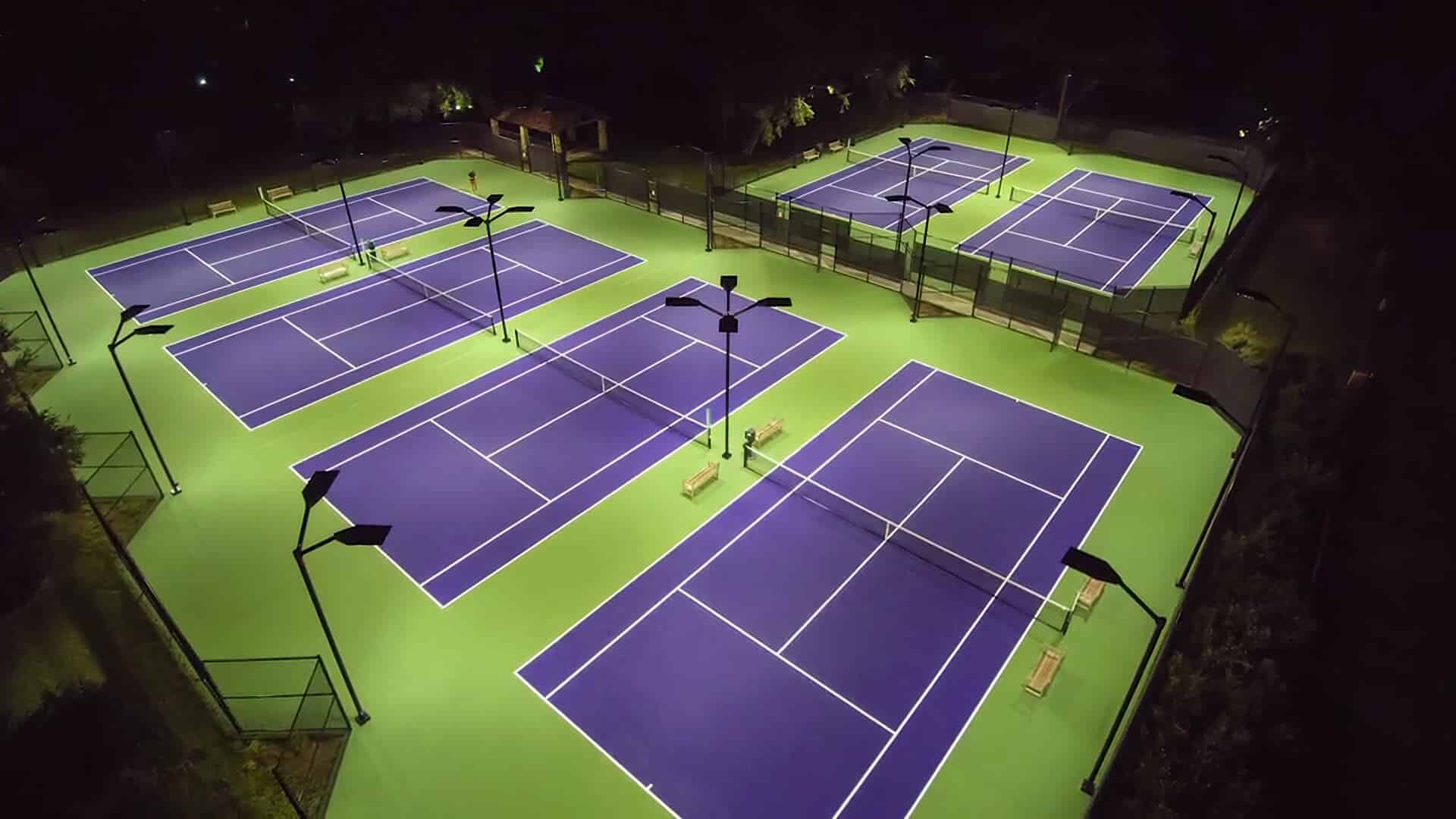
Professional tennis court lighting transforms recreational facilities into versatile venues usable from early morning through late evening. Quality illumination extends playing hours, accommodates busy schedules, and enables tournament play regardless of natural light availability. Modern LED systems offer unprecedented efficiency, longevity, and performance compared to legacy lighting technologies. The Dallas climate, with its hot summers and mild winters, makes evening play particularly appealing during warmer months when daytime temperatures become uncomfortable. Properly designed lighting systems enable safe, enjoyable nighttime tennis while minimizing energy costs and environmental impact. Understanding lighting standards and installation requirements ensures optimal results for any court configuration.
Professional Tennis Court Lighting Installation
Tennis court lighting installation requires specialized expertise combining electrical knowledge, structural engineering, and sports lighting design. Professional installers understand the unique requirements of tennis illumination, including uniform light distribution, glare control, and ball visibility optimization. This specialized knowledge ensures systems meet both functional needs and regulatory requirements. The installation process encompasses multiple phases from initial design and permitting through equipment procurement, structural installation, electrical connection, and final aiming and adjustment. Each phase requires specific expertise and coordination with other trades. Professional project management ensures timely completion while maintaining quality standards. Texas electrical codes and local regulations govern court lighting installation, requiring licensed electricians and appropriate permits. Professional installers navigate these requirements, securing necessary approvals and ensuring all work meets safety standards. Code compliance protects facility owners from liability while ensuring safe, reliable system operation. Modern installation techniques minimize court surface disruption and maximize system longevity. Underground wiring in proper conduits, engineered pole foundations, and weatherproof connections protect against environmental damage. Quality installation practices ensure decades of reliable service with minimal maintenance requirements.
Benefits of LED Court Lighting
LED technology has revolutionized sports lighting with dramatic improvements in energy efficiency, longevity, and light quality. Modern LED fixtures consume 50 to 75 percent less electricity than traditional metal halide systems while providing superior illumination. Energy savings often recover additional LED system costs within a few years of operation. Fixture lifespan extends dramatically with LED technology, with quality systems rated for 50,000 to 100,000 hours of operation. This longevity eliminates frequent lamp replacement required by older technologies, reducing maintenance costs and inconvenience. Many LED systems operate for 15 to 20 years without requiring lamp changes. Instant on-off capability eliminates warm-up periods required by metal halide lamps, allowing flexible lighting use without energy waste. This feature proves particularly valuable for facilities with variable usage patterns or emergency lighting needs. Dimming capabilities further extend flexibility and energy savings. Light quality improvements include better color rendering, more consistent output over fixture life, and reduced flicker. Players experience improved visibility with colors appearing more natural and ball tracking enhanced. These quality improvements contribute to better play experience and reduced eye strain during extended evening sessions. Environmental benefits include reduced energy consumption, elimination of hazardous materials found in some legacy lamps, and decreased waste from lamp replacements. LED systems align with sustainability goals while providing economic advantages through operating cost reductions.
Lighting Standards for Tennis Courts
Illumination levels for tennis courts vary based on intended use, with recreational play requiring less light than competitive or tournament activities. Industry standards specify minimum light levels measured in foot-candles (fc) at the playing surface. Understanding these standards helps facilities select appropriate lighting levels for their specific needs. Recreational play typically requires 30 to 50 foot-candles of horizontal illumination measured at court surface level. This level provides adequate visibility for casual play and practice while controlling installation and operating costs. Community parks, residential courts, and school physical education facilities often use recreational lighting levels. Club competition and intermediate tournament play demands higher illumination levels of 50 to 75 foot-candles. These levels support more serious play with faster ball speeds and greater precision requirements. Club facilities hosting league play and junior development programs typically invest in competition-grade lighting. Professional tournament standards require 75 to 100 or more foot-candles with exceptional uniformity. Television broadcast requirements may specify even higher levels. Facilities hosting professional or collegiate events must meet these stringent standards through carefully designed high-output systems. Uniformity ratios measure light consistency across the playing surface, with lower ratios indicating more even illumination. Standards typically require maximum-to-minimum ratios of 2:1 or better, meaning the brightest areas are no more than twice as bright as the darkest. Poor uniformity creates distracting hot spots and shadows that affect play quality.
Light Pole Placement and Height
Pole placement significantly affects lighting quality, glare control, and player experience. Standard configurations position poles outside court perimeter fencing, directing light inward across the playing surface. Placement must consider court orientation, surrounding facilities, and potential light spillage onto neighboring properties. Typical pole heights range from 20 to 30 feet for tennis court applications, with taller poles generally providing better light distribution and reduced glare. Height selection balances illumination quality against wind loading, structural costs, and aesthetic considerations. Professional designers use photometric analysis to optimize height and placement for specific site conditions. Four-pole configurations represent the standard approach for single tennis courts, with poles positioned at each corner outside the fence line. This arrangement provides balanced illumination from multiple directions, minimizing shadows and achieving good uniformity. Pole spacing and distance from court edges require careful calculation for optimal results. Six or eight-pole configurations serve multi-court complexes or facilities requiring tournament-grade illumination. Additional poles allow lower mounting heights while maintaining coverage and uniformity, or provide enhanced illumination levels for professional play. Complex layouts require sophisticated design to prevent interference between adjacent court lighting systems. Pole foundations must withstand wind loads imposed by fixtures and poles themselves. Engineering calculations consider local wind speeds, exposure conditions, and fixture surface area to determine foundation specifications. Proper foundation design prevents pole movement or failure during severe weather events.
Fixture Types and Specifications
LED fixture selection considers light output, distribution pattern, efficiency, and durability. Output measured in lumens must provide required illumination levels at court surface while accounting for mounting height and spacing. Distribution patterns should concentrate light on playing surfaces while minimizing spillage. Optics and reflector systems shape light output to achieve desired distribution. Type III or Type V distributions commonly serve tennis court applications, directing light in specific patterns that cover rectangular playing areas. Advanced LED fixtures incorporate precision optics that maximize efficiency while controlling glare and spill light. Color temperature affects both appearance and visibility, with cooler temperatures (4000K to 5000K) providing crisp illumination that enhances ball visibility. Warmer temperatures (2700K to 3000K) create softer ambiance but may reduce visibility for fast-moving objects. Most tennis facilities select neutral to cool color temperatures for optimal play conditions. Color Rendering Index (CRI) measures how accurately light reveals object colors compared to natural daylight. Higher CRI values (80+) ensure balls, lines, and surroundings appear natural, improving player experience and visibility. Premium LED fixtures offer CRI values of 90 or higher for exceptional color quality. Durability features protect fixtures from environmental exposure common in outdoor tennis facilities. Weatherproof housings with appropriate IP ratings prevent moisture and dust intrusion. Corrosion-resistant finishes withstand atmospheric conditions. Quality fixtures include thermal management systems that maintain LED performance in hot Texas summers.
Glare Reduction Techniques
Glare control represents a critical aspect of tennis court lighting design, affecting both player comfort and performance. Direct glare from bright fixtures creates visual discomfort and reduces visibility of balls and court features. Proper design minimizes glare through strategic placement, shielding, and fixture selection. Pole positioning outside standard player sight lines reduces direct glare exposure. When players look across courts during normal play, fixtures should be positioned to avoid direct view. This placement consideration influences pole height, distance from courts, and fixture aiming angles. External shields and visors block light emission in directions that would cause glare while allowing necessary light distribution onto playing surfaces. These accessories attach to fixtures, providing glare control without significantly reducing system efficiency. Proper shield design balances glare control against illumination requirements. Aiming angles affect both glare and illumination quality. Fixtures should direct light primarily downward onto court surfaces rather than horizontally toward players. Professional aiming during installation ensures optimal angles that maximize court illumination while minimizing player exposure to bright sources. Backboard reflection creates indirect glare when light reflects from court backboards into player eyes. Positioning fixtures to avoid direct illumination of backboard surfaces, or using non-reflective backboard materials, prevents this problem. Court orientation and fence placement also influence reflection patterns.
Wiring and Electrical Requirements
Electrical service sizing must accommodate lighting system power requirements with appropriate capacity for future expansion. Load calculations consider fixture wattage, quantity, and diversity factors that account for simultaneous operation. Service upgrades may be necessary for large systems or older facilities with limited electrical capacity. Underground wiring in rigid conduit protects electrical conductors from damage and environmental exposure. Conduit sizing allows for future conductor additions and provides adequate wire fill ratios. Burial depths meet code requirements that vary based on conductor type and protection methods. Circuit design balances load distribution across multiple circuits for redundancy and capacity management. Separate circuits for different courts or zones allow selective operation and simplify troubleshooting. Ground fault protection requirements apply to outdoor circuits, with GFCI or equipment grounding conductor protection as specified by code. Control wiring connects switches, timers, photocells, and smart control systems to lighting circuits. Low-voltage control wiring requires appropriate separation from power conductors and proper terminations at control devices. Wireless control options eliminate some wiring requirements while providing flexible control capabilities. Electrical panels serving outdoor lighting require weatherproof enclosures rated for the installation environment. Panel locations should provide convenient access for operation and maintenance while protecting from accidental damage. Adequate working space around panels ensures safe maintenance procedures.
Smart Lighting Controls
Modern control systems extend lighting capabilities beyond simple on-off operation, providing scheduling, dimming, and remote management features. These smart controls enhance convenience, improve energy efficiency, and enable sophisticated operational strategies that match lighting to actual usage patterns. Time-based scheduling automatically operates lights according to programmed schedules reflecting typical usage patterns. Separate schedules for different days of the week accommodate varying programming throughout the week. Schedule adjustments respond to seasonal changes in daylight hours and usage patterns. Photocell controls activate lights automatically when ambient light drops below set thresholds, ensuring courts are illuminated whenever needed regardless of changing sunset times. Photocell integration with time controls prevents unnecessary daytime operation while guaranteeing evening availability. Dimming capabilities allow light level adjustment to match specific activities or conserve energy during low-priority use. Full illumination supports competitive play while reduced levels may suffice for practice or casual recreation. Dimming extends LED fixture life while reducing electricity consumption. Remote access and monitoring enable facility managers to control lighting from central locations or mobile devices. Usage monitoring tracks operating hours for maintenance planning and energy management. Alert notifications inform staff of system faults or operational anomalies requiring attention.
Energy Efficiency Considerations
LED lighting provides fundamental efficiency advantages, but additional strategies further reduce energy consumption and operating costs. Comprehensive efficiency planning considers fixture selection, control strategies, and operational practices that minimize waste while maintaining quality illumination. High-efficiency LED fixtures deliver more lumens per watt than standard products, reducing electricity consumption for equivalent light output. Premium fixtures with advanced optics and thermal management provide superior efficiency alongside extended lifespan. Initial investment in high-efficiency equipment generates ongoing savings throughout system life. Task-appropriate light levels prevent over-illumination that wastes energy without improving play experience. Installing systems that provide adequate but not excessive illumination for intended use matches energy consumption to actual requirements. Dimming capabilities allow further reduction when full output isn't necessary. Operating schedules that limit lighting to actual usage periods eliminate waste from unnecessary operation. Automated controls ensure lights operate only when courts are in use, preventing lights remaining on unoccupied courts. Motion sensors or usage-based controls can automate this management. Utility incentives and rebates may offset efficiency upgrade costs for qualifying projects. Many electric utilities offer programs encouraging LED conversion and smart control installation. Professional lighting contractors can identify applicable programs and assist with rebate applications.
Lighting Maintenance and Upgrades
Planned maintenance preserves lighting system performance and extends equipment lifespan. LED systems require less maintenance than legacy technologies, but periodic inspection and cleaning ensure optimal operation. Maintenance programs address fixture cleaning, aim adjustment, and component replacement when necessary. Fixture cleaning removes accumulated dirt, pollen, and debris that reduce light output. Exterior cleaning maintains appearance while preserving optical performance. Interior cleaning may be necessary if seals fail and contaminants enter fixtures. Cleaning schedules depend on environmental conditions and fixture locations. Aim verification ensures fixtures continue directing light as designed. Wind, vibration, or structural movement may shift fixture orientation over time. Periodic checking and readjustment maintain illumination quality and prevent glare issues from misaligned fixtures. Component replacement addresses failed LEDs, drivers, or control components. While LED fixtures offer exceptional longevity, individual components may require replacement during system life. Modular designs facilitate component replacement without complete fixture replacement. System upgrades allow facilities to improve existing lighting through retrofit options or complete replacement. LED retrofit kits update legacy fixtures with modern technology. When existing infrastructure limits upgrade potential, complete system replacement provides opportunity to implement current best practices.
Why Choose Us for Court Lighting Installation?
- -Experienced professionals with years of industry expertise
- -High-quality materials and state-of-the-art equipment
- -Free consultations and competitive pricing
- -Satisfaction guaranteed on every project
Ready to Get Started?
Contact us today for a free consultation and estimate on your court lighting installation project.
Request a Free Estimate