Tennis Court Drainage
Expert tennis court drainage systems designed to prevent water damage and extend court lifespan in Texas weather conditions.
Proper drainage stands as one of the most critical factors in tennis court construction and longevity. Water is perhaps the single greatest enemy of court surfaces, causing damage through multiple mechanisms including freeze-thaw cycles, erosion, mold growth, and direct surface deterioration. A well-designed drainage system protects your investment while ensuring consistent playability regardless of weather conditions. The Dallas area presents unique drainage challenges with clay-heavy soils, intense rainstorms, and occasional freeze events. Understanding these regional factors and implementing appropriate drainage solutions prevents the costly repairs that result from water damage. Whether building new courts or retrofitting existing facilities, drainage deserves careful attention and professional implementation.
Comprehensive Tennis Court Drainage Solutions
Effective tennis court drainage requires a multi-layered approach addressing surface runoff, subsurface water movement, and perimeter drainage. Surface drainage directs rainwater off the playing area through proper slope design, while subsurface systems manage groundwater and prevent saturation of base materials. Perimeter drainage protects court edges where water naturally concentrates. Professional drainage design begins with site analysis evaluating topography, soil permeability, and existing water patterns. Engineers identify natural drainage paths and potential problem areas where water might accumulate. This information guides system design ensuring water moves efficiently away from the court structure. Modern drainage solutions incorporate durable materials engineered for long-term performance in outdoor conditions. PVC and corrugated HDPE piping resist degradation from soil chemistry and temperature extremes. Geotextile fabrics prevent soil intrusion while allowing water passage. Quality components installed with proper techniques provide decades of reliable service.
Why Proper Drainage Is Critical
Water damage represents the primary cause of premature tennis court failure. Standing water penetrates surface coatings, reaching base materials where it causes structural damage through multiple mechanisms. Prevention through proper drainage costs far less than repairing water-damaged courts, making drainage investment essential for facility management. Acrylic court surfaces are particularly vulnerable to water damage. Prolonged moisture exposure causes coating delamination, color fading, and surface softening that reduces playability. Once water breaches the surface protection, damage accelerates rapidly, often requiring complete resurfacing to restore acceptable conditions. Base materials including asphalt and stone layers deteriorate when saturated. Water weakens asphalt binders and washes fine particles from aggregate bases, creating voids that lead to settling and cracking. Proper drainage maintains base integrity, supporting surface materials and preventing structural failures. Player safety depends on dry court surfaces. Wet courts create slip hazards that increase injury risk, while standing water in low spots creates play interruptions and uneven ball bounce. Effective drainage ensures courts dry quickly after rainfall, maximizing available playing time.
Common Drainage Problems on Tennis Courts
Bird baths represent the most visible drainage problem, appearing as standing water in low spots after rainfall. These depressions develop from base settling, surface wear, or improper original construction slope. Even shallow bird baths indicate drainage deficiencies requiring correction to prevent accelerated deterioration in affected areas. Poor surface slope prevents water from flowing to collection points. Industry standards require minimum 1% slope (1 inch of drop per 8 feet of run) from court center to edges. Flat or improperly sloped areas retain water regardless of drainage system capacity. Correcting slope problems may require surface grinding or leveling during resurfacing. Clogged drainage systems lose effectiveness over time as sediment, vegetation, and debris accumulate. French drains fill with soil, catch basins trap leaves, and outlet pipes block with roots or debris. Regular maintenance keeps systems functioning, but eventually systems require cleaning or component replacement. Subsurface water movement creates hydrostatic pressure beneath court bases. High water tables or uphill water sources saturate base materials from below, causing expansion, contraction, and eventual structural damage. Subsurface drainage systems address these challenging conditions by intercepting and redirecting groundwater flow. Edge drainage failures allow water to undermine court perimeters. Missing or damaged perimeter drains, settled backfill, or improper grading around court edges create pathways for water intrusion. This edge-focused damage often spreads inward, compromising larger court sections over time.
Surface Grading and Slope Design
Proper surface slope begins with base construction establishing drainage patterns that persist through the court's service life. Both asphalt and concrete bases must be placed and finished to precise grades verified with professional surveying equipment. Slope errors at this stage require costly correction later. Crown slope design elevates the court centerline, directing water toward both sides simultaneously. This traditional approach works well for single courts with adequate side clearance. Crown height typically measures 3 to 6 inches above court edges, creating adequate slope for drainage while remaining imperceptible to players. Single-direction slope channels all water toward one side, useful for courts with space constraints or when directing water toward specific collection points. This design requires greater overall elevation change but simplifies drainage system layout. Single slope works particularly well for courts installed against buildings or property lines. Surface slope verification during construction ensures design grades are achieved. Laser levels, digital slope gauges, and precision measurements confirm adequate drainage angles throughout the court. Post-construction settlement may require slope correction during resurfacing cycles.
French Drain Installation
French drains provide subsurface water collection using perforated pipes surrounded by gravel and filter fabric. These systems intercept groundwater before it reaches court bases, providing protection in areas with high water tables or significant uphill water sources. Properly installed French drains offer decades of reliable service. Installation begins with trench excavation to appropriate depths, typically below court base elevation. Trench width accommodates gravel bedding and pipe placement while allowing proper compaction around the completed system. Excavated material evaluation helps determine whether native soil can be reused or requires replacement with free-draining backfill. Perforated pipe selection considers flow capacity, durability, and installation requirements. Rigid PVC pipe offers strength and consistent performance, while flexible corrugated pipe accommodates irregular trenches and simplifies installation. Pipe diameter sizing depends on expected water volumes and system length. Gravel bedding surrounds pipes with free-draining material that facilitates water entry while supporting the pipe. Clean crushed stone in specific size ranges provides optimal drainage characteristics. Gravel depth below and around pipes ensures water can enter from all directions. Geotextile fabric prevents soil migration into the gravel bed that would eventually clog the system. Fabric wraps the gravel envelope, allowing water passage while blocking fine soil particles. Quality filter fabric significantly extends French drain service life by maintaining system permeability.
Channel Drain Systems
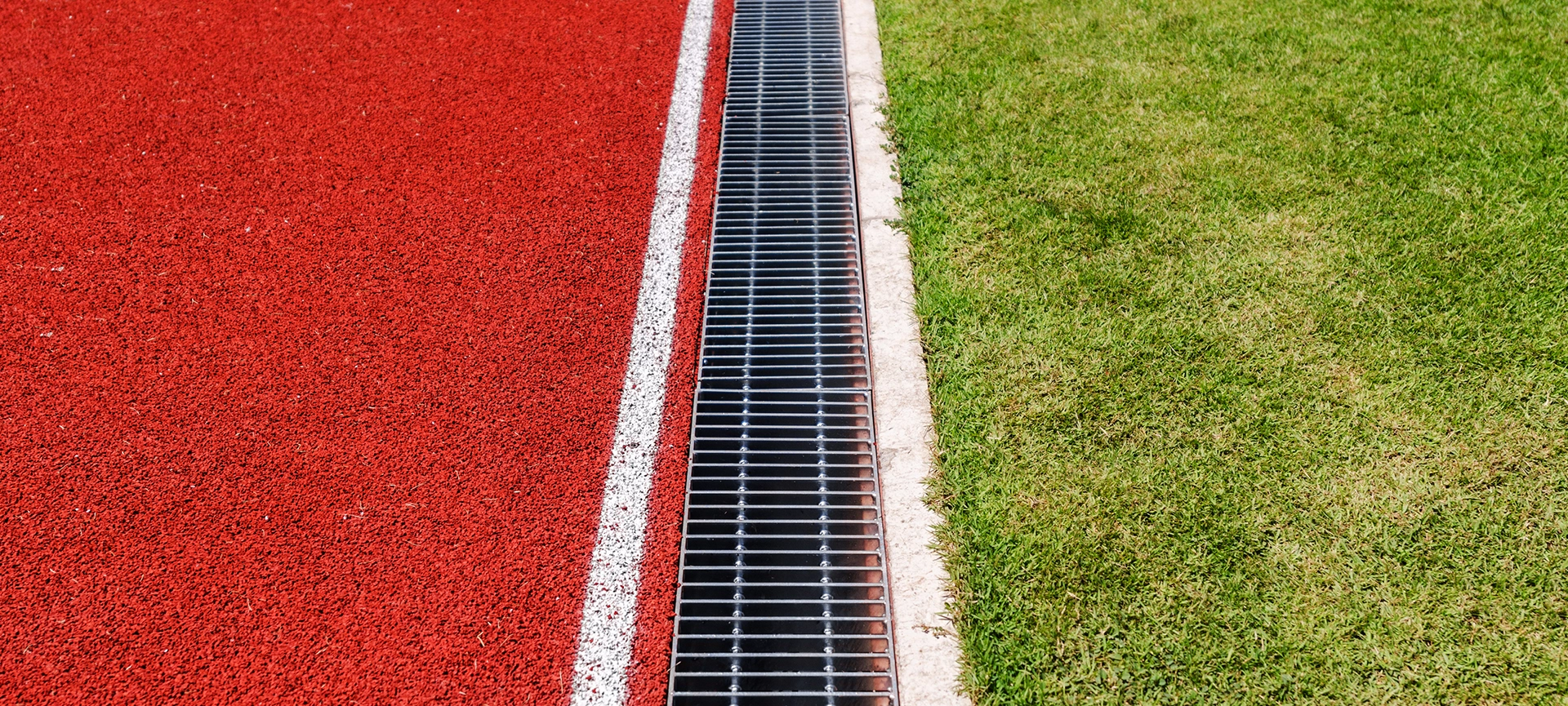
Channel drains provide surface water collection along court edges or across traffic areas where concentrated flow occurs. These linear systems consist of covered channels that capture water across their entire length, directing it to collection points or outlet pipes. Channel drains handle high flow volumes while remaining unobtrusive. Court perimeter applications install channel drains along fence lines or court edges where surface water naturally concentrates. These locations receive sheet flow from the entire court surface, requiring drains sized for maximum expected rainfall intensity. Perimeter channels protect adjacent areas from erosion while moving water efficiently away from the court. Cross-court channel drains span playing surfaces at strategic locations, often where two courts meet or where topography creates water concentration. Specialized low-profile channels minimize play interference while providing effective drainage. Proper placement and grate selection ensure player safety and minimize trip hazards. Channel drain sizing considers expected water volumes, slope, and outlet capacity. Undersized systems overflow during heavy rain, while oversized installations waste resources. Professional engineers calculate design flows based on local rainfall data and contributing drainage areas. Grate selection balances water entry capacity with safety and maintenance considerations. Slotted grates handle high flows but may present trip hazards or allow debris entry. Mesh or perforated grates exclude debris but may limit flow capacity. Removable grates facilitate cleaning and maintenance access.
Catch Basin Solutions
Catch basins collect water from surface drains and underground pipes, providing connection points to storm sewer systems or daylight outlets. These box-like structures include sediment traps that prevent debris from entering outlet pipes while allowing easy access for maintenance. Strategic catch basin placement optimizes overall drainage system performance. Placement locations concentrate water from multiple sources including court surface drains, perimeter systems, and surrounding landscape areas. Basins serve as junction points where multiple drain lines converge before continuing to final outlets. Proper placement minimizes piping runs while ensuring complete drainage coverage. Sizing considers maximum expected flow, debris accumulation, and maintenance access requirements. Larger basins provide greater sediment storage capacity and easier cleaning access but require more extensive excavation. Standard sizes accommodate most residential and commercial tennis court applications. Sump depth below outlet pipe inverts creates sediment trapping zones that prevent debris from entering downstream piping. Regular cleaning removes accumulated material before it blocks outlet pipes. Easy access through removable lids encourages necessary maintenance that keeps systems functioning properly.
Subsurface Drainage Systems
Subsurface drainage addresses groundwater management independent of surface water control. These systems install below court base elevation, intercepting water movement through soil before it reaches structural components. Subsurface drainage proves essential in areas with high water tables, significant springs, or uphill water sources. Perimeter drain systems surround court structures with continuous drainage collection. These systems typically combine perforated pipe with gravel bedding installed around court excavations. Perimeter drains capture water moving toward the court from surrounding areas, preventing saturation of base materials. Under-drain systems install within or beneath base layers, providing positive drainage for water that penetrates surface materials. These systems prove particularly valuable for clay courts requiring specific moisture content or for facilities built on poorly draining soils. Under-drains connect to perimeter systems or daylight outlets. Interception drains install uphill from courts, capturing groundwater before it reaches the facility. These preventive systems prove cost-effective when site conditions indicate significant water movement toward planned court locations. Interception drains protect not only courts but also surrounding landscape and structures.
Perimeter Drainage Strategies
Perimeter drainage protects court edges where surface and subsurface water naturally concentrate. These areas receive runoff from court surfaces plus drainage from surrounding landscape, creating high water volumes in relatively small spaces. Effective perimeter drainage prevents edge erosion, undermining, and water intrusion beneath court bases. Swale and berm systems create landscape features that direct water around rather than onto court areas. Swales are shallow vegetated channels that convey water, while berms are raised areas that block and redirect flow. These natural drainage features complement engineered systems while enhancing site aesthetics. Surface grading around court perimeters ensures water moves away from rather than toward court structures. Common construction errors create depressions or slopes toward courts that concentrate water at edges. Correcting these issues may require landscape regrading or the installation of additional drainage infrastructure. Downspout and roof drainage management prevents concentrated water discharge near court perimeters. Building gutters should direct water well away from courts through downspout extensions, underground piping, or surface drainage features. Undirected roof water causes localized saturation and erosion issues.
Dallas Climate and Drainage Considerations
North Texas clay soils present unique drainage challenges due to low permeability and high expansion-contraction characteristics. Water moves slowly through clay, creating saturation issues that persist long after rainfall ends. Clay expansion when wet and contraction when dry causes ground movement that affects court structural integrity. Intense thunderstorms common to the Dallas area generate high rainfall rates that overwhelm inadequate drainage systems. Design standards must accommodate these extreme events rather than average conditions. Systems sized for typical rainfall fail during severe storms, causing damage that might have been prevented with appropriate capacity. Flash drought conditions between rain events create soil cracking that affects drainage patterns. Deep cracks channel water rapidly into subsurface zones during subsequent rainfall, bypassing surface drainage systems. These complex soil dynamics require experienced design approaches that account for variable conditions. Freeze events, though infrequent, can damage drainage systems and court surfaces when water accumulates and freezes. Proper drainage that removes water quickly prevents ice formation that causes surface heaving and coating damage. Winter maintenance should verify drainage system function before cold weather arrives.
Why Choose Us for Tennis Court Drainage?
- -Experienced professionals with years of industry expertise
- -High-quality materials and state-of-the-art equipment
- -Free consultations and competitive pricing
- -Satisfaction guaranteed on every project
Ready to Get Started?
Contact us today for a free consultation and estimate on your tennis court drainage project.
Request a Free Estimate